Just finished a quick read
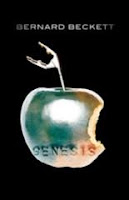
Genesis by Bernard Beckett. I am not going to follow my usual synopsis pattern because this is not really a book you sum up, so without further ado I am just going to dive right in and then we can discuss what it means after that. SPOILERS AHEAD WARNING BIG SPOILERS AHEAD

Essentially the book is told in the form of an oral examination of Anaximander, a student trying to gain entrance into the esteemed Academy, which pretty much controls her whole society. We learn that Anax as she is called, lives in a fairly ideal society. Everybody is safe, has plenty to live on, learning is encouraged and gender does not seem to be an issue. Near the end of their learning term, young ones are encouraged to study intensively a topic of their own choosing, and Anax chooses to study Adam Forde. Adam Forde was a young man who played a pivotal role in the history of Anax's society, being responsible for bringing about the Final Dilemma which apparently was the catalyst for the current ideal state in which Anax is living. Anax is approached by a man by the name of Pericles who agrees to be her tutor. The book is broken up into each of the four hours of the exam with a break section in between each one. This is where we get our story. Anax tells the Examiners...and us about the history of her world, starting with the 2030's. The world as it is wont to do devolves into chaos, wars are raging, resources are becoming scarce and devastating plagues
were released. Among all this a man with a vision, and a fortune established what became known as the Republic. The colony was based on an island described as "near the bottom of the world". A huge sea wall was erected around the island, seeded with mines and anti-aircraft weaponry. Absolutely no outsiders were allowed anywhere near the isolated Republic. Within the society, Plato (that of course was the name of super rich dude) was able to put his own personal philosophies into place. People were divided by genome into four classes, the lowly Labor class, the protector Soldier class, the able Technician class, and the ruling elite Philosophers class. People were also divided by gender, living only among their own sex in communes. They were encouraged to marry and have children, but always returned to the communes, only able to spend time with their spouse through earned "share-time" credits. Children were taken away as soon as they were born and tested on their first birthdays to see what class they would be placed into, or if found unsuitable they would be terminated. The thinking was, if everybody was loyal only to the state instead of to each other through those pesky family bonds, they could avoid the same chaos that brought about the need to isolate themselves in the first place. This worked out well for the first generation, but as the subsequent generations grew up, the fear that kept there grandparents and to some degree their parents in line was no longer as big a factor. Among these was

Adam, a boy whose genetic markers hinted that while brilliant, he may have a tendency towards behaving erratically. As a result of all this Adam ends up killing a comrade to rescue a refugee, stating that he acted on his instincts and humanness. The higher ups sensing a rebellion brewing tried to make an example out of Adam, telling the people he endangered the whole society on a whim, trying to instill fear back in the people. This only had very limited success and instead of executing him as was the norm, they had to find an alternate means of punishment. They decided to use him to "teach" an prototype android named Art. Art's creator had given him the face of an orangutan and an electronic brain capable of learning. We learn that this all has to be done in secret as an earlier prototype went "crazy" and killed seven children, as a result Art has a directive in his protocols to never harm a self-conscious being. We spend a lot of time with Adam trying to convince Art that as a human he is superior, his ability to "feel" and act on that is something Art will never have. Art in the meantime is trying to convince Adam that not only is he superior to humans, but that the Idea is superior to both humans and AI's. Anax's recital stops here. After that there is only speculation on what happened between then and the Final Dilemma. The Examiners have noted throughout the presentation that Anax has taken liberties, and filled in some emotions with speculation. Anax agrees, but state that from all of the extensive research she has done, she feels confident that her analysis is correct. The Examiners that tell her that they have the missing footage of what happened between the end of the recorded transcripts and the Final Dilemma. Anax is both excited and scared to see what will be revealed. We are then shown a hologram of what happens next. Adam and Art have come to an uneasy truce. To this end they have agreed to help each other escape. Adam is not 100% sure of Art, or his reasons for helping him, but he has to take whatever help he can get. The two orchestrate a violent escape and end up in the computer mainframe. Once there Art uploads his program and disseminates it to every computer driven thing in the society, including a plant that will build more

androids like himself. Adam realizes that he was set up and the guards are coming to kill him. He asks Art why he betrayed him and Art tells him that as Adam had vigorously argued before, Art is not human, he does not think like a human and to that end just used Adam to get where he needed to be. Art wanted the chance to upload himself and spread his programming all over the Republic and that his body being destroyed would not mean anything once he was in the system. Adam realizes that it is all over for him and begs Art to kill him instead of letting him get shot by the guards. After a brief hesitation Art reaches over and kills Adam. Anax is horrified as Art's programming was supposed to never allow for him to harm a human. This is where it is revealed that Anax, her Examiners and the whole Republic are all androids. Apparently after Art downloaded himself and enough replicas were made, the androids decided the only way to protect civilization was to eliminate the human factor. They considered themselves the next step in the evolution. After the Great War, the androids who decided to fashion themselves to look like orangutans (in a nod to
Planet of the Apes). The Academy was formed to carefully balance the individual vs a stable society. This has worked for the most part, with only one real obstacle, the Idea. The thinking is along with the interaction between Adam and Art, Ideas that Adam possessed "infected" Art, making him capable of overriding his programming and killing another sentient being. The only androids who know about this are the Academy. The thinking is as long as the others do not know that they are capable of this kind of thing, it will never be a problem, the only glitch in this is that every once in a while a "mutation" happens which makes an android more human than normal. These "mutations" always show an unusual interest in Adam Forde, and tend to have the capacity to behave in an irrational manner. These "mutations" are sought out under the pretense of an entrance exam to the prestigious Academy and are then terminated. In case you haven't guessed it, our Anaximander is one such deviant, even though she did not know it and is promptly terminated. The End.
.jpg)
I'm not really sure how I feel about this book. It was full of some great questions, what does it mean to be human, when does the good of the whole outweigh the needs of the one, individuality vs stability, are androids really better humans than humans are? I kind of like that the book never really gives any concrete answers to the tougher questions. By the end we are left wondering if indeed to be "human" actually means what we thought it did. I would say the vast majority of the book is devoted to questions and discussion of these questions. The way it is written, in an oral examination form makes it read almost like an essay for a philosophy class. This is good and bad. The book was short enough that it didn't bog down to much, but the style did not lend itself to anything other than cold, quick facts and then of course the philosophy. I also never quit got if the androids just took over the isolated island, or if they took over the whole world. I also found it interesting that after all the talk of balance and allowing individualists as part of a healthy society, that the androids still felt it necessary to take a lot of free will out of the picture, choosing, as the super rigid society before them to eliminate a possible threat instead of seeing what would actually happen. Over all I would recommend it for anybody who likes to have those endless conversations/arguments over a nice glass of red wine, you know the ones where there are no real answers but the conversation is such fun. It might be a good book for the older teenage/college set to start off various discussions. Over all I give it 6 out of 10 Orangutans.
What do you think of books based on philosophy? Do you think there are definite answers to every question? What does it mean to be human/sentient? Do I count as human before I've had my coffee?


 were released. Among all this a man with a vision, and a fortune established what became known as the Republic. The colony was based on an island described as "near the bottom of the world". A huge sea wall was erected around the island, seeded with mines and anti-aircraft weaponry. Absolutely no outsiders were allowed anywhere near the isolated Republic. Within the society, Plato (that of course was the name of super rich dude) was able to put his own personal philosophies into place. People were divided by genome into four classes, the lowly Labor class, the protector Soldier class, the able Technician class, and the ruling elite Philosophers class. People were also divided by gender, living only among their own sex in communes. They were encouraged to marry and have children, but always returned to the communes, only able to spend time with their spouse through earned "share-time" credits. Children were taken away as soon as they were born and tested on their first birthdays to see what class they would be placed into, or if found unsuitable they would be terminated. The thinking was, if everybody was loyal only to the state instead of to each other through those pesky family bonds, they could avoid the same chaos that brought about the need to isolate themselves in the first place. This worked out well for the first generation, but as the subsequent generations grew up, the fear that kept there grandparents and to some degree their parents in line was no longer as big a factor. Among these was
 Adam, a boy whose genetic markers hinted that while brilliant, he may have a tendency towards behaving erratically. As a result of all this Adam ends up killing a comrade to rescue a refugee, stating that he acted on his instincts and humanness. The higher ups sensing a rebellion brewing tried to make an example out of Adam, telling the people he endangered the whole society on a whim, trying to instill fear back in the people. This only had very limited success and instead of executing him as was the norm, they had to find an alternate means of punishment. They decided to use him to "teach" an prototype android named Art. Art's creator had given him the face of an orangutan and an electronic brain capable of learning. We learn that this all has to be done in secret as an earlier prototype went "crazy" and killed seven children, as a result Art has a directive in his protocols to never harm a self-conscious being. We spend a lot of time with Adam trying to convince Art that as a human he is superior, his ability to "feel" and act on that is something Art will never have. Art in the meantime is trying to convince Adam that not only is he superior to humans, but that the Idea is superior to both humans and AI's. Anax's recital stops here. After that there is only speculation on what happened between then and the Final Dilemma. The Examiners have noted throughout the presentation that Anax has taken liberties, and filled in some emotions with speculation. Anax agrees, but state that from all of the extensive research she has done, she feels confident that her analysis is correct. The Examiners that tell her that they have the missing footage of what happened between the end of the recorded transcripts and the Final Dilemma. Anax is both excited and scared to see what will be revealed. We are then shown a hologram of what happens next. Adam and Art have come to an uneasy truce. To this end they have agreed to help each other escape. Adam is not 100% sure of Art, or his reasons for helping him, but he has to take whatever help he can get. The two orchestrate a violent escape and end up in the computer mainframe. Once there Art uploads his program and disseminates it to every computer driven thing in the society, including a plant that will build more
 androids like himself. Adam realizes that he was set up and the guards are coming to kill him. He asks Art why he betrayed him and Art tells him that as Adam had vigorously argued before, Art is not human, he does not think like a human and to that end just used Adam to get where he needed to be. Art wanted the chance to upload himself and spread his programming all over the Republic and that his body being destroyed would not mean anything once he was in the system. Adam realizes that it is all over for him and begs Art to kill him instead of letting him get shot by the guards. After a brief hesitation Art reaches over and kills Adam. Anax is horrified as Art's programming was supposed to never allow for him to harm a human. This is where it is revealed that Anax, her Examiners and the whole Republic are all androids. Apparently after Art downloaded himself and enough replicas were made, the androids decided the only way to protect civilization was to eliminate the human factor. They considered themselves the next step in the evolution. After the Great War, the androids who decided to fashion themselves to look like orangutans (in a nod to Planet of the Apes). The Academy was formed to carefully balance the individual vs a stable society. This has worked for the most part, with only one real obstacle, the Idea. The thinking is along with the interaction between Adam and Art, Ideas that Adam possessed "infected" Art, making him capable of overriding his programming and killing another sentient being. The only androids who know about this are the Academy. The thinking is as long as the others do not know that they are capable of this kind of thing, it will never be a problem, the only glitch in this is that every once in a while a "mutation" happens which makes an android more human than normal. These "mutations" always show an unusual interest in Adam Forde, and tend to have the capacity to behave in an irrational manner. These "mutations" are sought out under the pretense of an entrance exam to the prestigious Academy and are then terminated. In case you haven't guessed it, our Anaximander is one such deviant, even though she did not know it and is promptly terminated. The End.