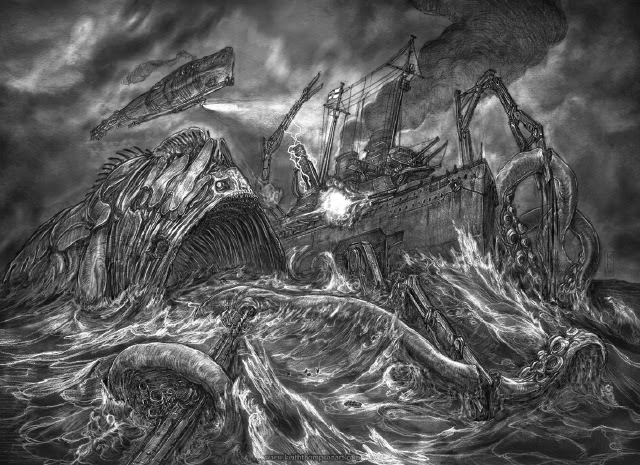
I got to discover a new genre with my most recent book...well it was less of a discovery and more finding out there was a name for it. The book is Queen Victoria's Book of Spells a short story collection edited by my favorites Ellen Datlow and Terri Windling. It is a collection of stories that are set in the Victorian era and in general feature a very subtle style of magic with some stories popping in some steampunk for good measure. This genre is apparently called Gaslamp Fantasy, which is awesome sounding so I'm on board. This was as always a great collection by these two women. Here are a few of my favorites.
The Fairy Enterprise by Jeffery Ford - This is a cheeky little story about a man who is pretty awful. He decides to use the local superstitions to "grow faries" and sell them to whoever will buy them. His plan is actually pretty ingenious...if not completely dishonest. He as in all good stories gets his comeuppance when it turns out the faries are real and have a a vengeful streak. He is devoured from the inside and we all cheer. Good story.
The Memory Book by Maureen McHugh - This story is perfect for reading on a dreary dark day. It is equal parts creepy, sad, horrifying and to the point. Laura Ann is a girl of reduced means who has discovered that if she uses her special memory book, she can influence those around her in unpredictable ways. The part I liked the best is that the results would come about in unexpected ways, and yet still recognizable from what Laura Ann put in her book. Good fall story.
For The Briar Rose by Elizabeth Wein - This is probably my favorite story in the collection. It brings together history, art, magical realism and an atmosphere that stuck with me. It is a semi-fictionalized version of the life of Margaret Burne-Jones the daughter of Edward Burne-Jones an artist. This story inspired a ton of research and reminded me how much I love the Aestheticism and Pre-Ralphite styles. To me this is what story telling is all about and it has inspired me in many good ways.
Phosphorus by Veronica Schanoes - This is another story based in historical fact with a twist of magic. We meet our narrator, a young poor woman of London who works in a match factory under heinous conditions. She has acquired what is known as phossy jaw, a debilitating condition that leads to death in most cases. Her Nan performs some subtle old school magic (which involves her own death...aw) to ensure that our narrator will live long enough to see the big rally that will hopefully improve conditions for the girls. It succeeds and I go off on another research tangent.
The Vital Importance of the Superficial by Ellen Kushner and Caroline Stevemer - This is the kind of story that just makes me happy. It is written in a back and forth letter style and is just so much fun. Considering that this format could get confusing the story, personalities and vibe came through very nicely. I love this kind of story because it balances wit and substance in a way that makes me smile. I don't know what else I can say without rehashing the whole story, but it is immensely readable and awesome.
This is just a sample of the great stories in this collection, I like all of them to varying degrees for a myriad of reasons. It felt new and fresh...even though I have read these types of stories before. I feel that is a testament to the editors care in putting together a new collection that is exciting and varied. This book encouraged me to go research any number of things (partly inspiring last weeks down the rabbit hole post) and also makes me want go go buy a bunch more books. I recommend this book to anybody who has an interest in the Victorian era, likes magic without all the big flash and bang of full on fantasy or just wants some cool new stories. I give this collection 8 out of ten World Expo's and will now run out to the bookstore for more of these stories. Happy Reading Everybody!
Showing posts with label Steampunk. Show all posts
Tuesday, November 24, 2015
Thursday, October 1, 2015
Chalk And Circles
Picked up a book over the summer that had a very interesting premise that I felt could go very very well, or very very wrong. Since the book involved chalk and a school as major components of the plot, I choose to read it when the school season started...'cause I'm weird that way. Anyways the book is called The Rithmastist by Brandson Sanderson and apart from a few of my normal picky complaints I enjoyed it. As always SPOILERS AHEAD!
Our story is set in an alternate America where instead of a continent, we have islands...the map is actually super cool and one of the reasons I picked it up in the first place. Anyways, back to the story. In this alternate America...which is set in an alternate world all together a menace called chalklings, two dimensional beings that swarm people and essentially eat them. A defense has been devised by using a method of imbuing certain chalk circles with various types of defenses and then...well it's complicated and yet oddly in the book makes perfect sense. Essentially the only people who can use this chalk power are people called Rithmatists, people who are chosen through some sort of pseudo-religious process when a child is eight years old. The person is then trained in one of several academies along side the regular kids and then sent to the island of Nebrask where the wild chalklings have been contained for the most part. This is very dangerous work and Rithmatists are partly revered, partly feared, and partly resented as they act very aloof and privileged. The story itself
focuses on Joel, a boy who is at the academy along side the Rithmatist students. He is obsessed with Rithamacy and can draw the circles better then anybody, but since he had to miss his inception due to his fathers death, he never got a change to be chosen as a Rithmatist so as good as his circles and drawings are, he can never actually use them. He is working for a Rithmatist Professor Fitch over the summer and meets Melody, a wild, crazy, Rithmatist student who is also studying with Fitch for some remedial work on her circles. The two of them assist the Professor in his investigation into a potential new menace. Rithmatist students have been disappearing and the only clues are the terrified circles the students had drawn to try and protect themselves and odd marks through out the house and grounds. Melody and Joel...after finally getting used to each other start to work together to try and figure out what is going on. Melody also tries to help Joel by convincing the priest to let him "re-do" his missed inception. He goes in, but he still does not become a Rithmatist (I love this, I'll tell you why in a bit). After much research, events, madness, crazyness and back and forthness we finally figure out what in the heck is going on. Turns out that at some point in his career both the main inspector AND a professor had been working on the defense of Nebrask and had gotten inside the circle. When they came out, they were carrying a sort of shadow being inside their heads. These shadow beings are the ones who had been kidnapping the students and turning them into wild chalklings. The shadows had figured out that there are a limited amount of Rithmatists and for some mysterious reason a new one can only be chosen when an old one dies. To this end, the shadows were turning the students into immortal, controllable chalkings that kept a new Rithmatists from coming into being. The book ends with a unique collaboration between Joel and Melody that is just awesome, culminating in them winning a huge competition...and the promise of a second book.
If that didn't make any sense...well I really didn't expect it to. This book is really hard to explain and in fact the book itself would be a bit difficult to follow if there were not these super great and simple illustration/diagrams in the beginning of every chapter. I feel this added visual element clarified a lot of confusing concepts, making the book much more followable. Ok, other then the pictures, what else did I like about the book? Let's start with the characters. Joel rocks it as a main character, he is layered and smart and still retains a bit of child like naivete mixed with an acceptance of his status that all combines with his obsession to make a complex yet relateable character. And that totally sounded like a pretentious review description...sorry. I like that Joel, while having some great talents...all
gotten by hard work and practice, he was never a super hero. Even when he gets the chance to become a vaunted Rithatist, the author took the brave and awesome route of leaving him "ordinary". This kept Joel from becoming one of those characters who just happens to be so talented that he can solve all the problems. On the flip side we have Melody, who just makes me smile every time she is on the page. She is loud, rude, attention seeking and at the center very good hearted. She is a Rithmatist, but resents that her path has been chosen for her. She sucks big time at all aspects of Rithmacy, except for the chalking creatures, which she excels at. The other characters also have their various facets, making every person we read about interesting on some level or another. One of the great things in this book is the various levels of cooperation between the characters. Joel and Melody show this the best in the competition where Joel draws the circles and Melody traces over them and brings them to life. We also see Professor Fitch work with the students, the head of the school work with pretty much everybody, all kinds of awesomeness. I love it 'cause most books use conflict and misunderstanding to create interest, and this way of showing people use their talents and flaws to create awesome teamwork made me super happy. World building in this book was both fantastic and infuriating. Overall it was a complete world, with a history, customs, culture and whatnot. We continually learn about this world (and it's awesomely unobtrusive steampunk elements) through out the story in many different ways. That being said, we never really learn about what the chalkings are, exactly what it takes to become a Rithmatist (though it is hinted at) or why they even exist. This is very annoying as it is kind of the center of the whole story! That being said, even though I desperately want to know a full chalking history and all its details, the story and most of the world did not suffer from this lack of knowledge too much. Overall I very much enjoyed this book for reasons that are difficult to describe. I give it 8 out of 10 clockwork coins and can't wait to read the next one. I recommend it to anybody who wants a non romance driven YA book, likes things that work, and want a great world experience. Happy Reading Everybody!
Our story is set in an alternate America where instead of a continent, we have islands...the map is actually super cool and one of the reasons I picked it up in the first place. Anyways, back to the story. In this alternate America...which is set in an alternate world all together a menace called chalklings, two dimensional beings that swarm people and essentially eat them. A defense has been devised by using a method of imbuing certain chalk circles with various types of defenses and then...well it's complicated and yet oddly in the book makes perfect sense. Essentially the only people who can use this chalk power are people called Rithmatists, people who are chosen through some sort of pseudo-religious process when a child is eight years old. The person is then trained in one of several academies along side the regular kids and then sent to the island of Nebrask where the wild chalklings have been contained for the most part. This is very dangerous work and Rithmatists are partly revered, partly feared, and partly resented as they act very aloof and privileged. The story itself
focuses on Joel, a boy who is at the academy along side the Rithmatist students. He is obsessed with Rithamacy and can draw the circles better then anybody, but since he had to miss his inception due to his fathers death, he never got a change to be chosen as a Rithmatist so as good as his circles and drawings are, he can never actually use them. He is working for a Rithmatist Professor Fitch over the summer and meets Melody, a wild, crazy, Rithmatist student who is also studying with Fitch for some remedial work on her circles. The two of them assist the Professor in his investigation into a potential new menace. Rithmatist students have been disappearing and the only clues are the terrified circles the students had drawn to try and protect themselves and odd marks through out the house and grounds. Melody and Joel...after finally getting used to each other start to work together to try and figure out what is going on. Melody also tries to help Joel by convincing the priest to let him "re-do" his missed inception. He goes in, but he still does not become a Rithmatist (I love this, I'll tell you why in a bit). After much research, events, madness, crazyness and back and forthness we finally figure out what in the heck is going on. Turns out that at some point in his career both the main inspector AND a professor had been working on the defense of Nebrask and had gotten inside the circle. When they came out, they were carrying a sort of shadow being inside their heads. These shadow beings are the ones who had been kidnapping the students and turning them into wild chalklings. The shadows had figured out that there are a limited amount of Rithmatists and for some mysterious reason a new one can only be chosen when an old one dies. To this end, the shadows were turning the students into immortal, controllable chalkings that kept a new Rithmatists from coming into being. The book ends with a unique collaboration between Joel and Melody that is just awesome, culminating in them winning a huge competition...and the promise of a second book.
If that didn't make any sense...well I really didn't expect it to. This book is really hard to explain and in fact the book itself would be a bit difficult to follow if there were not these super great and simple illustration/diagrams in the beginning of every chapter. I feel this added visual element clarified a lot of confusing concepts, making the book much more followable. Ok, other then the pictures, what else did I like about the book? Let's start with the characters. Joel rocks it as a main character, he is layered and smart and still retains a bit of child like naivete mixed with an acceptance of his status that all combines with his obsession to make a complex yet relateable character. And that totally sounded like a pretentious review description...sorry. I like that Joel, while having some great talents...all
gotten by hard work and practice, he was never a super hero. Even when he gets the chance to become a vaunted Rithatist, the author took the brave and awesome route of leaving him "ordinary". This kept Joel from becoming one of those characters who just happens to be so talented that he can solve all the problems. On the flip side we have Melody, who just makes me smile every time she is on the page. She is loud, rude, attention seeking and at the center very good hearted. She is a Rithmatist, but resents that her path has been chosen for her. She sucks big time at all aspects of Rithmacy, except for the chalking creatures, which she excels at. The other characters also have their various facets, making every person we read about interesting on some level or another. One of the great things in this book is the various levels of cooperation between the characters. Joel and Melody show this the best in the competition where Joel draws the circles and Melody traces over them and brings them to life. We also see Professor Fitch work with the students, the head of the school work with pretty much everybody, all kinds of awesomeness. I love it 'cause most books use conflict and misunderstanding to create interest, and this way of showing people use their talents and flaws to create awesome teamwork made me super happy. World building in this book was both fantastic and infuriating. Overall it was a complete world, with a history, customs, culture and whatnot. We continually learn about this world (and it's awesomely unobtrusive steampunk elements) through out the story in many different ways. That being said, we never really learn about what the chalkings are, exactly what it takes to become a Rithmatist (though it is hinted at) or why they even exist. This is very annoying as it is kind of the center of the whole story! That being said, even though I desperately want to know a full chalking history and all its details, the story and most of the world did not suffer from this lack of knowledge too much. Overall I very much enjoyed this book for reasons that are difficult to describe. I give it 8 out of 10 clockwork coins and can't wait to read the next one. I recommend it to anybody who wants a non romance driven YA book, likes things that work, and want a great world experience. Happy Reading Everybody!
Friday, March 20, 2015
Darwinist Vs Clankers
If this rambling is even more rambly and incoherent then normal, just blame it on the 36 straight hours I just worked...I'm gonna blame a lot of things on that :-). I did however find time to finish a couple of books, so lets ramble shall we. Today I will ramble about Goliath by Scott Westerfeld, the last book in the Leviathan trilogy. This conclusion to our steampunk/alternate history series packed in a lot of stuff so lets get right to it. As always SPOILERS AHEAD!
When we left our exiled Austrian Prince Alek and his friend midshipman Dylan Sharp (who is really a girl disguised as a boy by the name of Deryn) they had just gotten back on the Leviathan after helping with the Ottoman revolution. They are now flying their big beastie across the world on a secret mission. They end up in Siberia rescuing a Serb scientist and his guards. The man turns out to be Nikola Tesla, the man behind the Tesla cannons from the last book. He is convinced that the mass destruction of the Siberian forest they were rescued from was from his new mega weapon that he has dubbed Goliath. Tesla convinces Alek that just the mere threat of a weapon that can completely destroy a city should end the war. Alek (who still feels it's his destiny to end the war) decides to back Tesla and the captain of the Leviathan is instructed to assist him. Along the way Alek (with the help of his perspicacious loris Borvil) finally discovers that Dylan is actually the girl Deryn. After a bit of a falling out the two reconcile and agree to never have secrets again. The Leviathan and crew head to America via Japan to bring Tesla back to his Goliath. While in Japan, Deryn and Alek get to
experience a culture where both fabricated beasties and steam powered machines co-exist in a peaceful harmony. The Leviathan ends up in California where they are greeted by William Randolph Hearst, a newspaper man with Clanker leanings. We learn that America is another country that has both Clanker and Darwinist factions, but unlike Japan, they are frequently at odds with one another. Hearst sabotages the Leviathan so that they end up crippled in Mexico. Pancho Villa, the Mexican leader of a rebel group helps repair it...along with filming it. Along the way Deryn get's hurt and the obnoxious reporter Eddie Malone discovers she is a girl and intends to reveal it in print when they arrive in New York. Alek and Deryn discuss the future and how they are sad that they will part ways in New York, Alek staying behind to help Tesla and Deryn either continuing with the Leviathan or being punished for her deception. Alek disembarks and after surviving an attack by the Clankers, convinces Eddie Malone to write about him being the heir to the throne instead of Deryn. Alek and his company go with Tesla to perform a test/demonstration of the Goliath to the world to try and prove the vast strength of the weapon and hopefully get the world to end the war. Aboard the Leviahan Deryn discovers that the Clankers are going to send a weapon machine to destroy Goliath. Deryn convinces the captain to go back and defend Alek and company. All sorts of chaos and action occurs and Tesla decides that he needs to actually destroy Berlin to prove his point. Alek decides that he cannot justify the destruction of a city, along with the loss of countless lives, even if it does stop the war. He and Tesla tussle and Tesla ends up electrocuted. The Goliath essentially self destructs and a major disaster is averted. America finally enters the war, based on the Clanker attack on home soil. Deryn finally gets through to Alek that he and his parents are not responsible for the war. Alek decides to not become "king" of Austria, instead working with Deryn to help as many people as he can. We end with our intrepid duo planning their next adventure and the fate of the world still undecided.
This book was very very full of everything. We went all over the world, were introduced to a ton of people, saw beasties and machines everywhere, whew! Overall I felt this book lacked a bit of focus that the first two had, but I could understand the author was trying to finish everything up as plausibly as possible, which I appreciate. The author was also trying to impart a bit of flavor from everywhere, showing us how complicated the real WWI era was. I appreciated the thought, but personally found it a bit excessive. I could have done without the Poncho Villa part, and he could have probably skipped the California part as well, both parts were well written and added some flavor, but over all
felt a bit excessive. I also wanted the perspicacious loris's to play a bit of a bigger part as they had been built up so much in the previous books. I thoroughly enjoyed the crews stop in Japan, it was cool to see a place where technology, science, and life melded so well together, the author once again made a a place I am dying to visit. Deryn continues to make me happy, she is really a great character, and the author does a great job avoiding some of the triteness of the whole girl dressed as a guy scenerio. I liked how the "romance" between Deryn and Alek played out. Deryn has had time to come to grips with her feelings and instead of making hopeless advances, accepts how life is and is content to be Alek's friend. After the discover of Deryn's girlness, Alek goes through a couple of very realistic reactions, culminating in the two of them valuing their friendship as too important to ruin. The eventual morphing of the friendship into romance is natural, realistic, an did not make me want to throw things which is awesome. I liked the open ended conclusion as well, with America entering the war, but no actual resolution to it, just the hope that it will end sooner rather then later. The illustrations as always add just the right feel and very much compliment the series. Over all this was my least favorite book in the trilogy, but it was still awesome. The trilogy as a whole feels complete and the world the author created is wonderful and whole. This is one of those series that has me running to my books and internets to research the real version of this alternate history making the idea of the book last even longer hurrah! I give the book 6 out of 10 recording frogs and the series as a whole 7 out of 10 fighting bears and recommend it to anybody who likes steampunk, science, alternate history, history, good writing and excellent world building. Happy Reading Everybody!
Are you a Darwinist or a Clanker? What era would you like to see an alternate history set in? Is my writing more or less coherent on no sleep?
When we left our exiled Austrian Prince Alek and his friend midshipman Dylan Sharp (who is really a girl disguised as a boy by the name of Deryn) they had just gotten back on the Leviathan after helping with the Ottoman revolution. They are now flying their big beastie across the world on a secret mission. They end up in Siberia rescuing a Serb scientist and his guards. The man turns out to be Nikola Tesla, the man behind the Tesla cannons from the last book. He is convinced that the mass destruction of the Siberian forest they were rescued from was from his new mega weapon that he has dubbed Goliath. Tesla convinces Alek that just the mere threat of a weapon that can completely destroy a city should end the war. Alek (who still feels it's his destiny to end the war) decides to back Tesla and the captain of the Leviathan is instructed to assist him. Along the way Alek (with the help of his perspicacious loris Borvil) finally discovers that Dylan is actually the girl Deryn. After a bit of a falling out the two reconcile and agree to never have secrets again. The Leviathan and crew head to America via Japan to bring Tesla back to his Goliath. While in Japan, Deryn and Alek get to
experience a culture where both fabricated beasties and steam powered machines co-exist in a peaceful harmony. The Leviathan ends up in California where they are greeted by William Randolph Hearst, a newspaper man with Clanker leanings. We learn that America is another country that has both Clanker and Darwinist factions, but unlike Japan, they are frequently at odds with one another. Hearst sabotages the Leviathan so that they end up crippled in Mexico. Pancho Villa, the Mexican leader of a rebel group helps repair it...along with filming it. Along the way Deryn get's hurt and the obnoxious reporter Eddie Malone discovers she is a girl and intends to reveal it in print when they arrive in New York. Alek and Deryn discuss the future and how they are sad that they will part ways in New York, Alek staying behind to help Tesla and Deryn either continuing with the Leviathan or being punished for her deception. Alek disembarks and after surviving an attack by the Clankers, convinces Eddie Malone to write about him being the heir to the throne instead of Deryn. Alek and his company go with Tesla to perform a test/demonstration of the Goliath to the world to try and prove the vast strength of the weapon and hopefully get the world to end the war. Aboard the Leviahan Deryn discovers that the Clankers are going to send a weapon machine to destroy Goliath. Deryn convinces the captain to go back and defend Alek and company. All sorts of chaos and action occurs and Tesla decides that he needs to actually destroy Berlin to prove his point. Alek decides that he cannot justify the destruction of a city, along with the loss of countless lives, even if it does stop the war. He and Tesla tussle and Tesla ends up electrocuted. The Goliath essentially self destructs and a major disaster is averted. America finally enters the war, based on the Clanker attack on home soil. Deryn finally gets through to Alek that he and his parents are not responsible for the war. Alek decides to not become "king" of Austria, instead working with Deryn to help as many people as he can. We end with our intrepid duo planning their next adventure and the fate of the world still undecided.This book was very very full of everything. We went all over the world, were introduced to a ton of people, saw beasties and machines everywhere, whew! Overall I felt this book lacked a bit of focus that the first two had, but I could understand the author was trying to finish everything up as plausibly as possible, which I appreciate. The author was also trying to impart a bit of flavor from everywhere, showing us how complicated the real WWI era was. I appreciated the thought, but personally found it a bit excessive. I could have done without the Poncho Villa part, and he could have probably skipped the California part as well, both parts were well written and added some flavor, but over all
felt a bit excessive. I also wanted the perspicacious loris's to play a bit of a bigger part as they had been built up so much in the previous books. I thoroughly enjoyed the crews stop in Japan, it was cool to see a place where technology, science, and life melded so well together, the author once again made a a place I am dying to visit. Deryn continues to make me happy, she is really a great character, and the author does a great job avoiding some of the triteness of the whole girl dressed as a guy scenerio. I liked how the "romance" between Deryn and Alek played out. Deryn has had time to come to grips with her feelings and instead of making hopeless advances, accepts how life is and is content to be Alek's friend. After the discover of Deryn's girlness, Alek goes through a couple of very realistic reactions, culminating in the two of them valuing their friendship as too important to ruin. The eventual morphing of the friendship into romance is natural, realistic, an did not make me want to throw things which is awesome. I liked the open ended conclusion as well, with America entering the war, but no actual resolution to it, just the hope that it will end sooner rather then later. The illustrations as always add just the right feel and very much compliment the series. Over all this was my least favorite book in the trilogy, but it was still awesome. The trilogy as a whole feels complete and the world the author created is wonderful and whole. This is one of those series that has me running to my books and internets to research the real version of this alternate history making the idea of the book last even longer hurrah! I give the book 6 out of 10 recording frogs and the series as a whole 7 out of 10 fighting bears and recommend it to anybody who likes steampunk, science, alternate history, history, good writing and excellent world building. Happy Reading Everybody!
Are you a Darwinist or a Clanker? What era would you like to see an alternate history set in? Is my writing more or less coherent on no sleep?
Friday, September 12, 2014
Tick Tock Tales
Awsome Hubbin got me a pretty cool book for our anniversary. It is a collection of steampunk fairytales called Clockwork Fairy Tales edited by Stephen L. Antczak and James C. Basset. My last collection of steampunk stories was a bit hit or miss for me so I was bit nervous to start this one, but it turned out to be awesome! Here are some of my favorites.
La Valse by K.W. Jeter - This gory tale is based on The Red Shoes (which is a pretty gruesome story to begin with) is a bit of a nightmare scenario. It involves decrepit old nobles locked into a giant music box type apparatus. A mentor killed. Revenge taken and so much blood. Great story! Just be warned this is not your typical happily ever after fairy tale.
Fair Vasyl by Steven Harper - Lately I've really been into the old Baba Yaga tales and this one based on the old Russian story of Vasilisa the Beautiful captures the essence of the old witch perfectly. Along with one of my favorite villains, this story really captures the perfect essence of what a family should be, a group of beings who love and need each other.
Mose and the Automatic Fireman by Nancy A. Collins - Mose the Fireboy is the inspiration for this fantastic story of a small boy who becomes a major hero. The firefighter/EMS girl in me cheered the whole time I was reading this. It has a fantastic rollicking American Tall Tale feel that is perfect perfect perfect.
The Steampiper, the Stovepiper and the Pied Piper of New Hamelin, Texas by Gregory Nicoll - This story is what I always think of when I think steampunk. It has humor, it has sass, it has rats and it has so many clockwork toys! The American West has been used a lot in steampunk as an alternative to the normal Victorian England steampunk we see so much of, and in this story it works to its advantage.
There were several things about this collection that worked for me. First of all the stories were really steampunky, with lots of actual devices used to change or further the plot. Unlike a lot of supposed steampunk books I have read, where they toss in an airship, or goggles and call it a day, there was an actual building of alternate worlds using clockwork devices. The other thing I really liked was the combination in ever single story in this collection of sticking to the original tale they were based on, I mean every single story was recognizable, even down to some of the small details. While doing this, each story was also wildly original, I'm not sure how these authors pulled it off every single time, but they did. I give this collection 8 out of 10 wind up birds and recommend it to anybody who loves fairytales, steampunk, or a well told story.
What good steampunk stories have you read? How do you think the authors managed to stay true to the original tale, while still being completely original themselves? How bad do you want a clockwork pet?
La Valse by K.W. Jeter - This gory tale is based on The Red Shoes (which is a pretty gruesome story to begin with) is a bit of a nightmare scenario. It involves decrepit old nobles locked into a giant music box type apparatus. A mentor killed. Revenge taken and so much blood. Great story! Just be warned this is not your typical happily ever after fairy tale.
Fair Vasyl by Steven Harper - Lately I've really been into the old Baba Yaga tales and this one based on the old Russian story of Vasilisa the Beautiful captures the essence of the old witch perfectly. Along with one of my favorite villains, this story really captures the perfect essence of what a family should be, a group of beings who love and need each other.
Mose and the Automatic Fireman by Nancy A. Collins - Mose the Fireboy is the inspiration for this fantastic story of a small boy who becomes a major hero. The firefighter/EMS girl in me cheered the whole time I was reading this. It has a fantastic rollicking American Tall Tale feel that is perfect perfect perfect.
The Steampiper, the Stovepiper and the Pied Piper of New Hamelin, Texas by Gregory Nicoll - This story is what I always think of when I think steampunk. It has humor, it has sass, it has rats and it has so many clockwork toys! The American West has been used a lot in steampunk as an alternative to the normal Victorian England steampunk we see so much of, and in this story it works to its advantage.
There were several things about this collection that worked for me. First of all the stories were really steampunky, with lots of actual devices used to change or further the plot. Unlike a lot of supposed steampunk books I have read, where they toss in an airship, or goggles and call it a day, there was an actual building of alternate worlds using clockwork devices. The other thing I really liked was the combination in ever single story in this collection of sticking to the original tale they were based on, I mean every single story was recognizable, even down to some of the small details. While doing this, each story was also wildly original, I'm not sure how these authors pulled it off every single time, but they did. I give this collection 8 out of 10 wind up birds and recommend it to anybody who loves fairytales, steampunk, or a well told story.
What good steampunk stories have you read? How do you think the authors managed to stay true to the original tale, while still being completely original themselves? How bad do you want a clockwork pet?
Labels:
baba yaga,
clockwork,
Fairy Tale,
love,
rambling,
retold,
short stories,
Steampunk
Monday, February 10, 2014
Just Add An Airship
Hello all, I hope you all had a great weekend cheering on your favorites at the Olympics, I know I did. As much as I love the Olympics I had to take a break from the screen and read for a couple hours yesterday...ahh so refreshing :-) I finally finished The Mammoth Book of Steampunk with its 30 short stories all set in the Steampunk genre. This book took me FOREVER to get through and as I contemplated why I came up with one main reason. Writing steampunk is hard. I find steampunk and all its co-genres and sub-genres and parent-genres to be a very visual thing and sometimes it feels that all an author has to to is add a zeppelin and BAM steampunk. Now this is not true for everything, in my last post I showed off some of my favorite books in the punk genre's and all of them are excellent. A couple things I have noticed about genre books I like, the story always comes first. In all of the books I mentioned the story comes first, world building, characters, and genre conceits are all well done, but are added to serve the story, not make a book steampunk. Here is where I veer into total personal opinion, everything I am about to say hinges sole on my own likes and dislikes as a reader, you may see things in a completely different way, which is awesome and wonderful and you should tell me all about it.
The biggest problem I have with written steampunk, especially in short stories is that it gets really really dense. The authors seem to get caught up either in trying to describe every little cog and wheel or they meander into over inflated pseudophychology/philosophy of deepness/scientificology (those are all real words I swear). I love the idea of exploring alternate universes and timelines and I understand this means discussing various ideas of those times, but when you sound like a jumbled pretentious book your overly academic professor assigns you in how to sound like a rambling jerk class it is no longer enjoyable to me (yep I have actually taken that class before). The books and stories tend to get caught up in minutiae or
vagueness or vague minutiae when all you want is to know what is going on. Again I think that part of the problem is that steampunk is so visual, if I say steampunk what pops into your head is probably images of top hats and goggles, clockwork limbs, the ever present airship, the genres seems to be most easily defined by its visual aesthetic and when a writer tries to write to that you end up with a jumbled mess.
On the other hand their is some wonderfully written steampunk(ish) out there, oddly enough most of them are in the YA section (as I am sure you noticed in my last post). I think this is because YA novels are allowed to be about the story or characters, while adult genre sometimes feels it needs to be thought-provoking and deep, and gritty, and "real" all of the time. This is not to say that YA stories are all perfect, or you cannot get a good adult steampunk book, in my humble opinion I just have an easier time finding it in the YA section. I have also found that a lot of books fall into the steampunk (or sub-genre punk styles) without us even realizing it. Many of H.G. Wells and Jules Verne books could be now considered steampunk (though back when it was written it was plain old science fiction). I mean how can you read The Time Machine and not think clockwork and science, or how about my personal favorite 20,000 Leagues Under the Sea which has to be at least one of the inspirations for the octopus/seahorse steampunk aesthetic.
Overall I guess I have to say that I prefer my stories first and then genre second. If you can use cogs and wheels and steam and alternate history to tell me a great story then I will love you all that much more for it. But if the only way you can make a book steampunk is by overly descriptive phrases stating exactly what each automaton or air ship looks like, or use it as a platform to pontificate on an alternate philosophy then I will let somebody else enjoy it. As for The Mammoth Book of Steampunk (on which this post was supposed to be a rambling) it has some good little stories like Icebreaker by E. Catherine Tobler, Clockwork Fairies by Cat Rambo, The Mechanical Aviary of Emperor Jala-ud-din Muhammad Akbar by Shweta Narayan Numismatics in the Reigns of Naranh and Viu by Alex Dally MacFarlane and Lady Witherspoon's Solution by James Morrow. I found these stories to have a good mix of story and atmosphere and in a few a good bit of humor. This book is full of variety so if you have any interest in steampunk, science fiction or short stories go ahead and pick it up, just be warned it is not a sit down and read straight through collection, but more of a keep it at hand for when the mood strikes. I give it 5 out of 10 clockwork gear airships.
What part of steampunk most appeals to you? How defined do you think the steampunk or any specific genre or sub genre should be? Do you sometimes think that I am just a wind-up bot that types until my spring runs down?
The biggest problem I have with written steampunk, especially in short stories is that it gets really really dense. The authors seem to get caught up either in trying to describe every little cog and wheel or they meander into over inflated pseudophychology/philosophy of deepness/scientificology (those are all real words I swear). I love the idea of exploring alternate universes and timelines and I understand this means discussing various ideas of those times, but when you sound like a jumbled pretentious book your overly academic professor assigns you in how to sound like a rambling jerk class it is no longer enjoyable to me (yep I have actually taken that class before). The books and stories tend to get caught up in minutiae or
vagueness or vague minutiae when all you want is to know what is going on. Again I think that part of the problem is that steampunk is so visual, if I say steampunk what pops into your head is probably images of top hats and goggles, clockwork limbs, the ever present airship, the genres seems to be most easily defined by its visual aesthetic and when a writer tries to write to that you end up with a jumbled mess.
On the other hand their is some wonderfully written steampunk(ish) out there, oddly enough most of them are in the YA section (as I am sure you noticed in my last post). I think this is because YA novels are allowed to be about the story or characters, while adult genre sometimes feels it needs to be thought-provoking and deep, and gritty, and "real" all of the time. This is not to say that YA stories are all perfect, or you cannot get a good adult steampunk book, in my humble opinion I just have an easier time finding it in the YA section. I have also found that a lot of books fall into the steampunk (or sub-genre punk styles) without us even realizing it. Many of H.G. Wells and Jules Verne books could be now considered steampunk (though back when it was written it was plain old science fiction). I mean how can you read The Time Machine and not think clockwork and science, or how about my personal favorite 20,000 Leagues Under the Sea which has to be at least one of the inspirations for the octopus/seahorse steampunk aesthetic.
Overall I guess I have to say that I prefer my stories first and then genre second. If you can use cogs and wheels and steam and alternate history to tell me a great story then I will love you all that much more for it. But if the only way you can make a book steampunk is by overly descriptive phrases stating exactly what each automaton or air ship looks like, or use it as a platform to pontificate on an alternate philosophy then I will let somebody else enjoy it. As for The Mammoth Book of Steampunk (on which this post was supposed to be a rambling) it has some good little stories like Icebreaker by E. Catherine Tobler, Clockwork Fairies by Cat Rambo, The Mechanical Aviary of Emperor Jala-ud-din Muhammad Akbar by Shweta Narayan Numismatics in the Reigns of Naranh and Viu by Alex Dally MacFarlane and Lady Witherspoon's Solution by James Morrow. I found these stories to have a good mix of story and atmosphere and in a few a good bit of humor. This book is full of variety so if you have any interest in steampunk, science fiction or short stories go ahead and pick it up, just be warned it is not a sit down and read straight through collection, but more of a keep it at hand for when the mood strikes. I give it 5 out of 10 clockwork gear airships.What part of steampunk most appeals to you? How defined do you think the steampunk or any specific genre or sub genre should be? Do you sometimes think that I am just a wind-up bot that types until my spring runs down?
Friday, February 7, 2014
Punk!
My Hubbin is a punk :-) Not really, he is just into the various kinds of punk out there. So many kinds of punk out there, we have the original punk which was originally attached to the punk music craze, but then developed into several sub genres. We now have Steampunk, Cyberpunk, Biopunk, Dieselpunk, and a potential new one called Mythpunk (which is where one starts with a myth or fairytale and some post modern elements to it) and I am sure many more. As with all good movements each of these has a few unique books attached to them. Here are a couple of my favorites in each category for you to peruse.
![]() |
| Howls Moving Castle |
I consider this one of my favorite Steampunk books, it is set in an alternate Victorian era, has all kinds of clockwork machines, and females take a strong prominent role. I'm sure there are more typical examples out there and I promise I will do a whole post on this genre next week to discuss it, but I love this one too much to not use it today
| Cinder |
Ok again a young adult novel clearly aimed at girls is probably not the first book you think of when I mention Cyberpunk, but again it has all the elements. Cybernetics, clashes between the establishment and the working class, hacking, computers, creepy moon humans, viruses, gurbbing for a living, AND it is a great way to get females into all of it.
| The Windup Girl |
This book focuses on the genetic part of engineering, combing genetics with machinery and technology to produce a girl who while part cyborg is more importantly genetically imprinted to find and serve a master. This is the basis for most of the Biopunk movement, pointing out the potential harm and misuse of to much genetic tinkering in all its forms.
![]() |
| Leviathan Series |
I consider this book to be a bit more Dieselpunk then Steampunk, mostly because it is more about war type machines and set more in WWI-II era then a truly refined Victorian era. The various machines and the added bonus of a bit of Biopunk in the form of the Darwinist beasties make this book a mix of punk aesthetics, but the overall feel places it in the Dieselpunk category for me. This is also a great introduction into the various forms of the different punk movements if you have never given them a try before.
| The Girl Who Circumnavigated Fairyland in a Ship of Her Own Making |
Of all the new proposed genres I think I like the idea of Mythpunk the best. I am a sucker for fairytales and adding elements of clockwork, or the internet, or whatever modern invention tweaks your fancy seems to have endless possibilities. This book incorporates a girl who uses a wrench as a sword and encounters all kinds of machinery and even some technology as she explores fairyland.
Hopefully some of these suggestions are able to show you that you don't have to be hard core punk to enjoy some these various subgenre's of a very popular phenomenon. I love the possibilities that adding a "punk" to the mix can bring, I love that these genre's are more then just books, they are a look, a sound, a feel and when all the various mediums come together you have something very cool. Hopefully Hubbin will also find something he likes...even if I did you a girl book for his beloved Cyberpunk. I will continue with a full on Steampunk post sometime next week because as always I have a lot to say on the matter :-) I hope everybody has a great weekend! Happy Reading Everybody!
What is your favorite sub-genre of punk? Do you think I am stretching a bit with my book picks? Do you think this whole punk craze has gone on long enough?
Monday, January 6, 2014
That Is One Big Monster
Hello everybody, I hope you are all staying warm and cozy during this cold snap. Please stay safe and have plenty of books to read when the electricity goes out. Speaking of electricity I finished the book Behemoth, which is the second book in Scott Westerfeld's, Leviathan series set in an alternate WWI era. Ok so maybe the two don't have a whole lot to do with each other, but I never said segues were my specialty. I finished this book on my epic road trip of reading and craziness and am now ready to ramble on about it. As always SPOILERS AHEAD!
We start our story a little while after the first book ends. We find our Austrian Prince in hiding Alek attempting to teach his British friend Midshipman Dylan (really a girl named Deryn in disguise) to fence aboard the now hybrid air ship Leviathan. They soon get into a fight with two German sea ships called ironclads who decide to show off their new weapon, the Tesla Tower, which is essentially a super cool lightning tower! The Leviathan is disabled, but is able to limp to the Ottoman Empire who at this point is still supposedly neutral in the coming conflict. At this point we learn that the Sultan of the Ottoman Empire had commissioned Britain to fabricate (I love that term) a ship an its companion creature called the
Osman and Behemoth respectively. Both were produced and both were spectacular and both were kept by the British Empire to help them with the upcoming war. The government told the Sultan that they were merely "borrowing" them and that they would be given over after the conflict was resolved. This obviously makes for shaky ground for any British ship landing on Ottoman soil. News finally gets out about the missing Prince and Alek and his men decide their best bet would be to make a run for it rather then become political prisoners of Britain. Alek is watching the weird eggs that made an appearance in the last book and one hatches right before he tries to escape. The creature that emerges is a small monkey type creature that can produce incredible sounds. It keeps screaming until Alek takes it with him, later learning the creature has imprinted on him. Alek makes good his escape with a few of his men. Deryn goes with Dr. Barlow to present one of the eggs to the Sultan and try and mend the fences as it were. When they get there it is apparent that the Germans have already made there move and are allied with the Sultan in all but official tidings. The egg is crushed and to prevent the Sultan from making Leviathan leave, she tells him that they are offering it in place of the Osman. This gives the Leviathan a few more days in dock to decide what to do about the iron clads with the dreaded Tesla cannons. Alek has met a man named Zaven, his daughter Lilit and Nene, Zaven's mother and the leader of the revolutionists. The group is trying to figure out how to overthrow the Sultan using the various walkers that guard the different parts of the
city and are under control of the citizens. The problem being that they are not allowed to be armed and are therefor no match for any of the big mechanical s that the army uses. Meanwhile Deryn has been given a mission to plant carnivorous metal eating barnacles to massive nets strung across the channel that prevents the Darwinists from using any of their big sea monsters. Her team is caught while she is underwater (using the coolest, weirdest, ookiest wetsuit ever) and she must find a way to escape. She swims across the channel into what seems to be a ship yard and is nearly run over by the Orient Express, here complete with a steaming Dragon engine. She makes good her escape and eventually hooks up with Alek who has found himself some friends in Istanbul. Deryn makes the suggestion that they use "spice bombs", essentially bags of eye watering spices that can be lobbed into the mechanicals of the opposing side. Being the DIL of a pepper farmer I can tell you that this is quit effective. The team goes into action, with a kind of twisted yet hilarious love triangle happening, probably the best use of the dreaded love triangle ever! Seriously go read it, it's funny. Alek convinces Deryn that by helping the revolution, they are also helping the Leviathan by destroying the Tesla towers to that it can lead the Behemoth in to destroy the iron clads which helps the revolution and may prevent the Ottoman Empire from going to war on either side. All goes pretty much according to plan, the mech walkers destroy the Tesla towers, the nets dissolve and allow the airships to guide the Behemoth through the channel into the harbor to destroy the iron clads. Unfortunatly Zaven is killed and one of Alek's men is injured. Deryn convinces Alek to bring his men aboard the Leviathen and continue his quest to stop the war from there. The whole ship now knows that Alek is the lost prince and actually treat him with honor and respect.
The book ends there with the promise of heading to the Far East in the conclusion of the trilogy.
I have to say I really enjoyed this book. In general I like the Darwinist/beasties side of this world better, but seeing the Clanker/mech side portrayed through the Ottoman Empire definitely gave it some real flavor. I liked the setting for this book (the author actually went to Istanbul to get an authentic take on it, which I think really came through). So often we think of WWI being a strictly European conflict, forgetting that the lines of countries and relationships were much different then. The characters as always are great, I have come to seriously love Dylan/Deryn. Her practicality and scratchiness (I don't know how else to put it) crack me up all the time. I thought that the plot was a bit more exciting in this book then the first one, but I did miss some of the beasties (though there was still plenty), I guess since the first book had so much Darwinist stuff, it was only fair to put in more Clanker stuff this book...at least the author did it with flair. I like how the author
treated his requisite love triangle. We know from the last book that Deryn is probably in love with Alek, who has no idea that s/he is a girl and just really likes him as a friend he was never allowed to have growing up. Enter Lilit who instantly causes Deryn to be jealous of her assumed love of Alek...until Alek informs Dylan that Lilit is really in love with him (who is really a her). At the end Lilit implies that she knows that Dylan is actually a Deryn before whisking away to continue her fathers revolution. The alternate history is always fun, with enough truth to make it recognizable, and enough fiction to make it enjoyable. I find this to be less of a steampunk series and more of a alternate history series...which may be what steampunk is, but that is for another post. The beastie that hatched from the egg is interesting with its ability to perceive much more then most humans, and it's unsettling way of conveying information. I think that this little guy will possibly play a bigger part in the last book. I am looking forward to see how this series finishes up and recommend this book at least as much as the first. Oh yeah and it has the same awesome illustrator Keith Thompson as the last book. I give this book 7 out of 10 beasties.
What kind of fabrication do you prefer mech or beastie? Do you like alternate histories or do the inaccuracies drive you crazy? Do I take way to much glee in twisted triangles?
We start our story a little while after the first book ends. We find our Austrian Prince in hiding Alek attempting to teach his British friend Midshipman Dylan (really a girl named Deryn in disguise) to fence aboard the now hybrid air ship Leviathan. They soon get into a fight with two German sea ships called ironclads who decide to show off their new weapon, the Tesla Tower, which is essentially a super cool lightning tower! The Leviathan is disabled, but is able to limp to the Ottoman Empire who at this point is still supposedly neutral in the coming conflict. At this point we learn that the Sultan of the Ottoman Empire had commissioned Britain to fabricate (I love that term) a ship an its companion creature called the
Osman and Behemoth respectively. Both were produced and both were spectacular and both were kept by the British Empire to help them with the upcoming war. The government told the Sultan that they were merely "borrowing" them and that they would be given over after the conflict was resolved. This obviously makes for shaky ground for any British ship landing on Ottoman soil. News finally gets out about the missing Prince and Alek and his men decide their best bet would be to make a run for it rather then become political prisoners of Britain. Alek is watching the weird eggs that made an appearance in the last book and one hatches right before he tries to escape. The creature that emerges is a small monkey type creature that can produce incredible sounds. It keeps screaming until Alek takes it with him, later learning the creature has imprinted on him. Alek makes good his escape with a few of his men. Deryn goes with Dr. Barlow to present one of the eggs to the Sultan and try and mend the fences as it were. When they get there it is apparent that the Germans have already made there move and are allied with the Sultan in all but official tidings. The egg is crushed and to prevent the Sultan from making Leviathan leave, she tells him that they are offering it in place of the Osman. This gives the Leviathan a few more days in dock to decide what to do about the iron clads with the dreaded Tesla cannons. Alek has met a man named Zaven, his daughter Lilit and Nene, Zaven's mother and the leader of the revolutionists. The group is trying to figure out how to overthrow the Sultan using the various walkers that guard the different parts of the
city and are under control of the citizens. The problem being that they are not allowed to be armed and are therefor no match for any of the big mechanical s that the army uses. Meanwhile Deryn has been given a mission to plant carnivorous metal eating barnacles to massive nets strung across the channel that prevents the Darwinists from using any of their big sea monsters. Her team is caught while she is underwater (using the coolest, weirdest, ookiest wetsuit ever) and she must find a way to escape. She swims across the channel into what seems to be a ship yard and is nearly run over by the Orient Express, here complete with a steaming Dragon engine. She makes good her escape and eventually hooks up with Alek who has found himself some friends in Istanbul. Deryn makes the suggestion that they use "spice bombs", essentially bags of eye watering spices that can be lobbed into the mechanicals of the opposing side. Being the DIL of a pepper farmer I can tell you that this is quit effective. The team goes into action, with a kind of twisted yet hilarious love triangle happening, probably the best use of the dreaded love triangle ever! Seriously go read it, it's funny. Alek convinces Deryn that by helping the revolution, they are also helping the Leviathan by destroying the Tesla towers to that it can lead the Behemoth in to destroy the iron clads which helps the revolution and may prevent the Ottoman Empire from going to war on either side. All goes pretty much according to plan, the mech walkers destroy the Tesla towers, the nets dissolve and allow the airships to guide the Behemoth through the channel into the harbor to destroy the iron clads. Unfortunatly Zaven is killed and one of Alek's men is injured. Deryn convinces Alek to bring his men aboard the Leviathen and continue his quest to stop the war from there. The whole ship now knows that Alek is the lost prince and actually treat him with honor and respect.The book ends there with the promise of heading to the Far East in the conclusion of the trilogy.
I have to say I really enjoyed this book. In general I like the Darwinist/beasties side of this world better, but seeing the Clanker/mech side portrayed through the Ottoman Empire definitely gave it some real flavor. I liked the setting for this book (the author actually went to Istanbul to get an authentic take on it, which I think really came through). So often we think of WWI being a strictly European conflict, forgetting that the lines of countries and relationships were much different then. The characters as always are great, I have come to seriously love Dylan/Deryn. Her practicality and scratchiness (I don't know how else to put it) crack me up all the time. I thought that the plot was a bit more exciting in this book then the first one, but I did miss some of the beasties (though there was still plenty), I guess since the first book had so much Darwinist stuff, it was only fair to put in more Clanker stuff this book...at least the author did it with flair. I like how the author
treated his requisite love triangle. We know from the last book that Deryn is probably in love with Alek, who has no idea that s/he is a girl and just really likes him as a friend he was never allowed to have growing up. Enter Lilit who instantly causes Deryn to be jealous of her assumed love of Alek...until Alek informs Dylan that Lilit is really in love with him (who is really a her). At the end Lilit implies that she knows that Dylan is actually a Deryn before whisking away to continue her fathers revolution. The alternate history is always fun, with enough truth to make it recognizable, and enough fiction to make it enjoyable. I find this to be less of a steampunk series and more of a alternate history series...which may be what steampunk is, but that is for another post. The beastie that hatched from the egg is interesting with its ability to perceive much more then most humans, and it's unsettling way of conveying information. I think that this little guy will possibly play a bigger part in the last book. I am looking forward to see how this series finishes up and recommend this book at least as much as the first. Oh yeah and it has the same awesome illustrator Keith Thompson as the last book. I give this book 7 out of 10 beasties.
What kind of fabrication do you prefer mech or beastie? Do you like alternate histories or do the inaccuracies drive you crazy? Do I take way to much glee in twisted triangles?
Labels:
alternate history,
beasties,
mech,
rambling,
Steampunk,
wwi,
young adult
Tuesday, November 26, 2013
Floating Jellyfish And Flying Machines
So among other random things, I have realized that most of the books I am reading are sequels. On top of that I realized I haven't done ramblings on any of the original books, so to remedy that for at least one book here is the complete and utter long winded rambling of Leviathan by Scott Westerfeld. I was not sure what I was getting into with this book. I love this authors world building skills and have yet to be disappointed by any of works so that was a point in his favor. On the other hand as much as I like steampunk (and I really love steampunk) I have had a hard time getting into to it in book form. Part of it is that steampunk to me is so very visual, it is a bit hard to convey it without sounding like a parts or fashion catalogs...but more on that in a different post. Needless to say I was wondering where on my love it or leave it scale this book would fall into. Shall we find out? As always SPOILERS AHEAD.
This book is an alternate history, set in a World War I type of era. We see that there are three main groups occupying Europe at the moment. The Darwinist who have learned to manipulate genetics and turn various living creatures into vehicles and tools. The Clankers who have captured the power of steam and can create just about anything from metal and gears. The Neutrals who essentially are people and places who have not been converted/captured to one side or the other yet. We start by meeting teenage Prince Aleksander (known as Alek) the son of Archduke Ferdinand making a daring escape with a few trusted advisers in a walker, which is a huge metal man type of machine that doubles as a tank. We learn that his parents have been murdered and he is next on the list. We then meet a young Scottish woman named Deryn who's dream it is to fly. She takes on the name of Dylan and with her brothers help joins the British Air Service. We
switch back and forth between these two learning about each one and the world they live in. Alek learns how to pilot and repair his walker and other machines, all while trying to find a place to hide. Deryn ends up on a huge living ship called Leviathan which incorporates whale DNA among other things to create a huge living airship. While on board Deryn meets Dr. Barlow a woman who has been instrumental in the DNA creation of various ships and tools. She is now transporting mysterious eggs, which must be protected at all costs. The airship is attacked by German clanker airplanes and the while they were defeated the airship suffered much damage. The ship crash lands in the hiding place of Alek and his band. Alek and Deryn convince everybody to work together to use parts from the walker to help fix the airship. In the process both Deryn and Dr. Barlow learn the truth of Alek's identity and in return show him the eggs. The ship is repaired just in time to escape the German Herkules (a giant clanker machine) and head towards Constantinople. This ends the first book in the series.
As you can probably tell by my brief (for me) synopsis the plot was pretty straight forward. The author sticks pretty closely to the events that led up to the real Great War (which is what WWI was called originally). The plot is fine, nothing mind blowing but solid and moves forward at a good pace. The characters are also solid. I especially like the character of Dr. Barlow as she maintains the perfect balance of femininity, class and brains. The real appeal to me in this book is the world building. This in general is what I read Scott Westerfeld for, his stories are always good, usually with some social commentary, characters are solid with enough variety to keep from getting to bored, but to me his strength lies in the way he creates his worlds. In the Uglies series I kept going back over and over into this world he created, wanting to keep exploring it. He again gave me that feeling of a complete world, with its own culture, rules and flair. Iespecially was entranced with the Darwinist Beasties. I still have dreams of riding in a Huxley which is essentially a floating jellyfish that has been modified into a single person hot air balloon. I thought this was a great twist on the steampunk idea. Not only to have the Clankers steam powered machines (which were all pretty cool and epic) but to add a bit of a twist with the animalistic nature of the beasties. The author created a world where the reader can live in long after they have finished the book. The plot of the book feels like one of any number of stories that can be told in this world, and I like it. Don't be fooled by the size of the book. The font and margins actually make it bigger then it reads and it is chock full of the coolest illustrations by Keith Thompson. I could totally see this book being made into a Miyazaki animated film. I would totally recommend this for any steampunk fan, Scott Westerfeld fan, or fans of a really well built world who like a little adventure. I give it 7 out of 10 floating jellyfish
What type are you a metal Clanker or a a animal Darwinist? Do your prefer to soar in the clouds, or speed over land? Is it weird that I regularly have dreams about floating jellyfish?
This book is an alternate history, set in a World War I type of era. We see that there are three main groups occupying Europe at the moment. The Darwinist who have learned to manipulate genetics and turn various living creatures into vehicles and tools. The Clankers who have captured the power of steam and can create just about anything from metal and gears. The Neutrals who essentially are people and places who have not been converted/captured to one side or the other yet. We start by meeting teenage Prince Aleksander (known as Alek) the son of Archduke Ferdinand making a daring escape with a few trusted advisers in a walker, which is a huge metal man type of machine that doubles as a tank. We learn that his parents have been murdered and he is next on the list. We then meet a young Scottish woman named Deryn who's dream it is to fly. She takes on the name of Dylan and with her brothers help joins the British Air Service. We
switch back and forth between these two learning about each one and the world they live in. Alek learns how to pilot and repair his walker and other machines, all while trying to find a place to hide. Deryn ends up on a huge living ship called Leviathan which incorporates whale DNA among other things to create a huge living airship. While on board Deryn meets Dr. Barlow a woman who has been instrumental in the DNA creation of various ships and tools. She is now transporting mysterious eggs, which must be protected at all costs. The airship is attacked by German clanker airplanes and the while they were defeated the airship suffered much damage. The ship crash lands in the hiding place of Alek and his band. Alek and Deryn convince everybody to work together to use parts from the walker to help fix the airship. In the process both Deryn and Dr. Barlow learn the truth of Alek's identity and in return show him the eggs. The ship is repaired just in time to escape the German Herkules (a giant clanker machine) and head towards Constantinople. This ends the first book in the series.
As you can probably tell by my brief (for me) synopsis the plot was pretty straight forward. The author sticks pretty closely to the events that led up to the real Great War (which is what WWI was called originally). The plot is fine, nothing mind blowing but solid and moves forward at a good pace. The characters are also solid. I especially like the character of Dr. Barlow as she maintains the perfect balance of femininity, class and brains. The real appeal to me in this book is the world building. This in general is what I read Scott Westerfeld for, his stories are always good, usually with some social commentary, characters are solid with enough variety to keep from getting to bored, but to me his strength lies in the way he creates his worlds. In the Uglies series I kept going back over and over into this world he created, wanting to keep exploring it. He again gave me that feeling of a complete world, with its own culture, rules and flair. Iespecially was entranced with the Darwinist Beasties. I still have dreams of riding in a Huxley which is essentially a floating jellyfish that has been modified into a single person hot air balloon. I thought this was a great twist on the steampunk idea. Not only to have the Clankers steam powered machines (which were all pretty cool and epic) but to add a bit of a twist with the animalistic nature of the beasties. The author created a world where the reader can live in long after they have finished the book. The plot of the book feels like one of any number of stories that can be told in this world, and I like it. Don't be fooled by the size of the book. The font and margins actually make it bigger then it reads and it is chock full of the coolest illustrations by Keith Thompson. I could totally see this book being made into a Miyazaki animated film. I would totally recommend this for any steampunk fan, Scott Westerfeld fan, or fans of a really well built world who like a little adventure. I give it 7 out of 10 floating jellyfishWhat type are you a metal Clanker or a a animal Darwinist? Do your prefer to soar in the clouds, or speed over land? Is it weird that I regularly have dreams about floating jellyfish?
Monday, February 25, 2013
Clockwork Covers
Happy Birthday (a day late) to my wonderful Baby Sis! Steampunk is a fast growing genre in everything from clothes, to music, even to books! The following are some really awesome covers that highlight the Steampunk world. (Please note, these are not necessarily books about Steampunk, that is for another post)
Now I want to run out and buy all of these just to have them looking good on my bookshelves at home. I hope these have inspired you to go find/make/explore your own version of Steampunk, especially of the literary variety!
| Clockwork Sketchbook |
| Steampunk Cover |
| Art Nouveau Steampunk |
| Steampunk Clock Notebook |
| Jules Verne Steampunk |
Labels:
art,
baby sis,
birthday,
book covers,
deviantart,
family,
notebook,
sketchbook,
Steampunk
Subscribe to:
Posts (Atom)


.jpg)

.jpg)
.jpg)